Legislative regulation of local self-governing activities discussed at meeting of “People’s Club” in Parliament
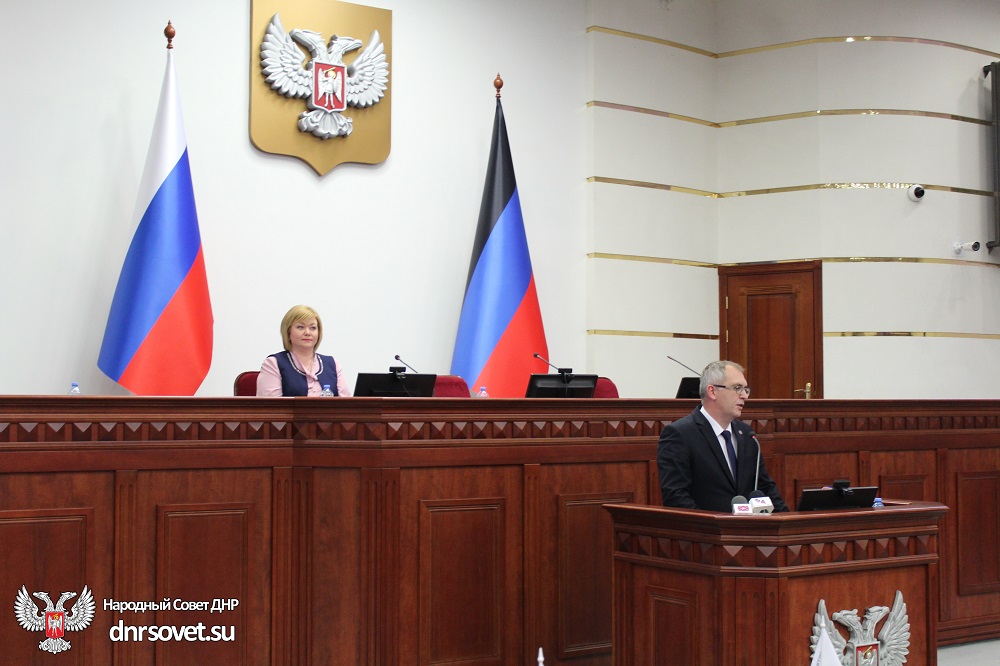
On May 3, in the city of Donetsk, within the framework of the People’s Club discussion platform on the basis of the DPR People’s Council, a meeting was held on the topic “The urgency and problems of legislative regulation of local governing activities in the Donetsk People’s Republic.”
The event was attended by the Chairman of the DPR People’s Council, Vladimir Bidyovka, the Deputy Chairman of the DPR People’s Council, Olga Makeyeva, deputies of the People’s Council, representatives of local administrations, universities of the Republic and the public, as well as activists of the Donetsk Republic and Free Donbass public movements.
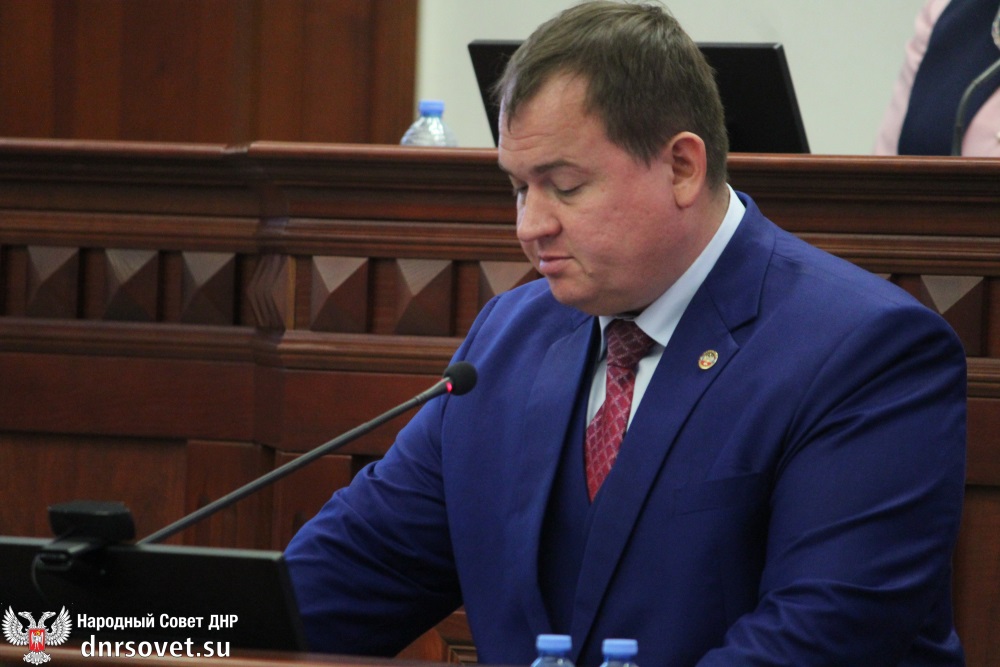
The meeting was opened by Vladimir Bidyovka, who, in his welcoming speech, emphasized the role of the People’s Council in shaping the legal concept of local government activities.
“Dear deputies and guests!
Today’s main topic of our meeting is the discussion of one of the most important public initiatives – the need to adopt a law on local self-government in the Donetsk People’s Republic.
Public hearings on this issue are underway in our state. The topic of local self-government is of great interest on the part of citizens and is considered as a principle of exercising power in the state and society. We see that our citizens today have a great need for participation in the life and development of the Republic.
The relevance and significance of the discussion of this topic in the framework of today’s meeting in the format of the People’s Club discussion platform is unquestionable. The People’s Council, as the highest legislative body of state power, must consider the said topic from the point of view of law.
I want to note that in the conditions of society’s constantly increasing needs, the task of the People’s Council deputies is to respond to them in a timely manner, as well as to take the necessary steps to actually implement them. This ensures the possibility of stable development of the entire Republic in the context of updating the needs of its inhabitants – a process characteristic of each modern state.
I urge not only those present, but all citizens of the Republic to actively participate in the discussion of the issue of drafting a law on local self-government, because this applies to all residents of the Donetsk People’s Republic.
Public hearings on the issue of discussing the relevance and problems of legislative regulation of the local self-government activities are declared open,” the Speaker of Parliament said.
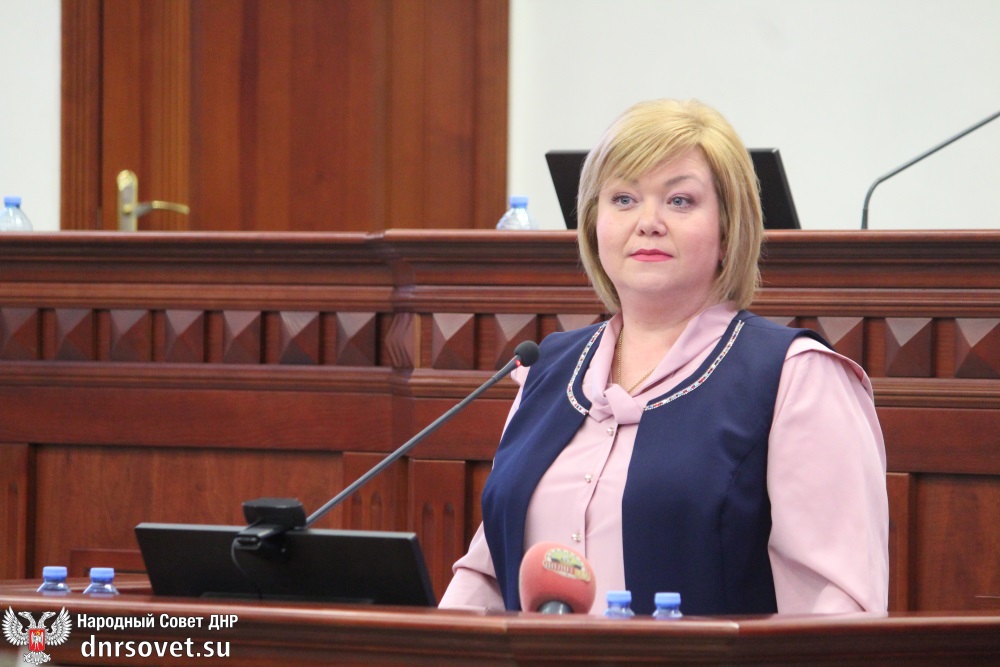
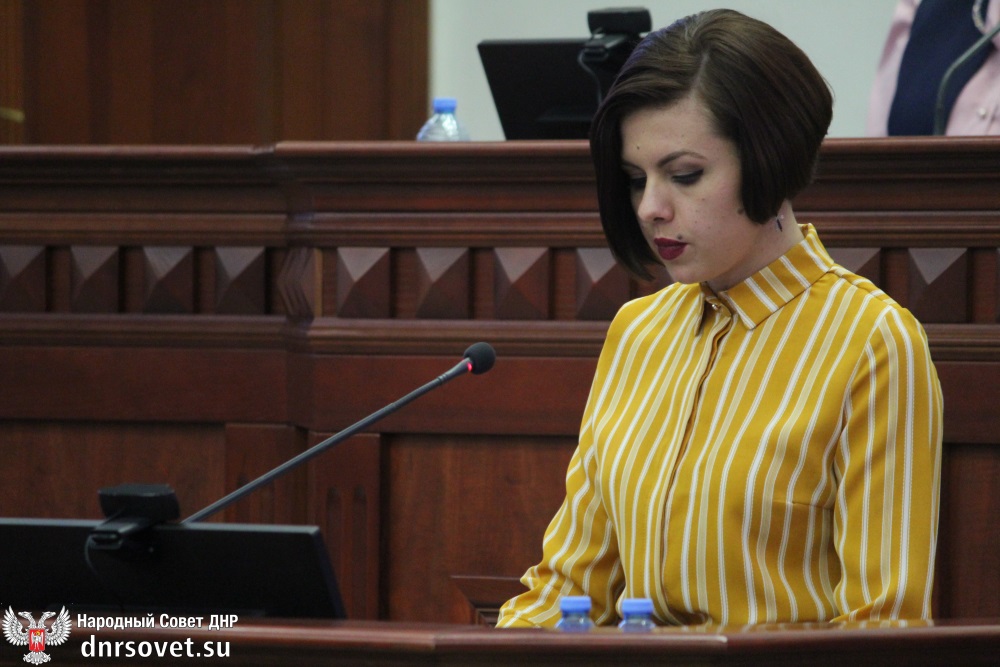
Then the floor was given to Deputy Chairman of the People’s Council Olga Makeyeva, who noted in her report that it was necessary to focus on the experience of the Russian Federation in creating a legislative framework for the activities of local governments.
“Local government is a vital component of any democratic state. The effective functioning of the local government system is largely determined by the level of development of the legal framework. In the Donetsk People’s Republic, this topic is defined only by the basic concepts enshrined in the DPR Constitution. We have yet to create a system of legislative and other regulatory acts, on the basis of which the local self-government bodies of the Donetsk People’s Republic will function.
At the same time, the guideline for state-building in the field of self-government for us is the experience of the Russian Federation,” the vice speaker said.
Further, the Deputy Chairman of the People’s Council substantiated the urgency of creating a system of local self-government in the DPR.
“As the practice of democratic states shows, the local level of power is the shortest and most direct way to solving pressing problems that are vital for a modern man. People evaluate the effectiveness of power by elementary criteria, understandable for everyone – heat in houses, street lighting, road quality, transportation, and the like. These issues are reasonably resolved taking into account the opinion of the population that lives directly in these localities. That is why one of the priority directions of Republic’s state policy is the development of local self-government, the establishment of permanent and all-round interaction of municipal authorities and the population,” Olga Makeyeva underlined.
She also focused on the tasks that the Donetsk People’s Republic needs to solve in order to create an effective system of local self-government to search for qualified personnel, improve the mechanisms of the judicial system, and so on.
“Forming an effective system of local government is always a long and rather complicated process. In the Donetsk People’s Republic, for objective reasons, this process is in the development stage and includes many unsolved problems related to the legislative support of the activities of local governments and an acute shortage of qualified specialists in the field of municipal government.
Thus, at present, the effectiveness of solving the problems of developing local self-government in the Donetsk People’s Republic depends on the effectiveness of solving a number of related organizational and legal issues. But the Head of the Republic confronted us with the task and together, in close cooperation, taking into account the accumulated life and professional experience, as well as using the newest technologies of the municipal administration, we will definitely solve it,” the vice-speaker summed up.
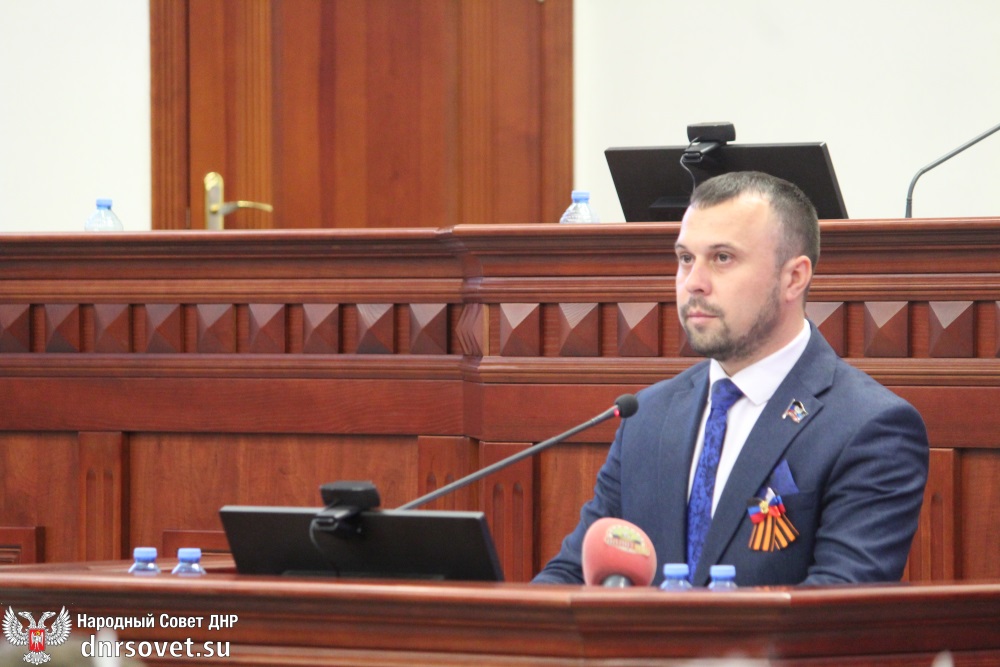
In turn, the deputy of the People’s Council, the chairman of the Committee of the People’s Council of Donetsk People’s Republic on Constitutional Legislation and State-Building, Maksim Knysh, in his report touched upon the issue of disposing of municipal property in the context of the local governments’ activities.
“The specificity of local self-government lies in its dual nature: political and public. Local self-government is an important element of civil society, a form of political self-organization of local communities. At that, one of the main issues of local importance is municipal property, which the population has the right to manage. Any transaction with municipal property should be carried out only with the consent of local governments. Of fundamental importance in the implementation of these functions is the legal regulation of relations in the field of municipal property, which together forms a complex inter-sectoral institution that combines the norms of land, civil and other branches of law,” the parliamentarian concluded.
For his part, Acting First Deputy Head of the Donetsk City Council Viktor Moiseyenko in his report raised the question of the need to create a unified information base, which would contain legal and juridical information, including the adopted regulatory legal acts, data for the compilation of socio-economic passport, etc.
“Local self-government as a form of management of territorial units is as close as possible to the population and is intended to express and protect the interests of citizens. Besides, local governing, being a link between the state power and the people, has a number of powers and resources for their implementation. Therefore, one of the activities of local self-government bodies is a communicative function, and it becomes noticeable only if a full-fledged notification of the population is organized. At the same time, the skilful use of information channels increases the effectiveness of local self-government bodies’ activities and the government as a whole,” he noted.
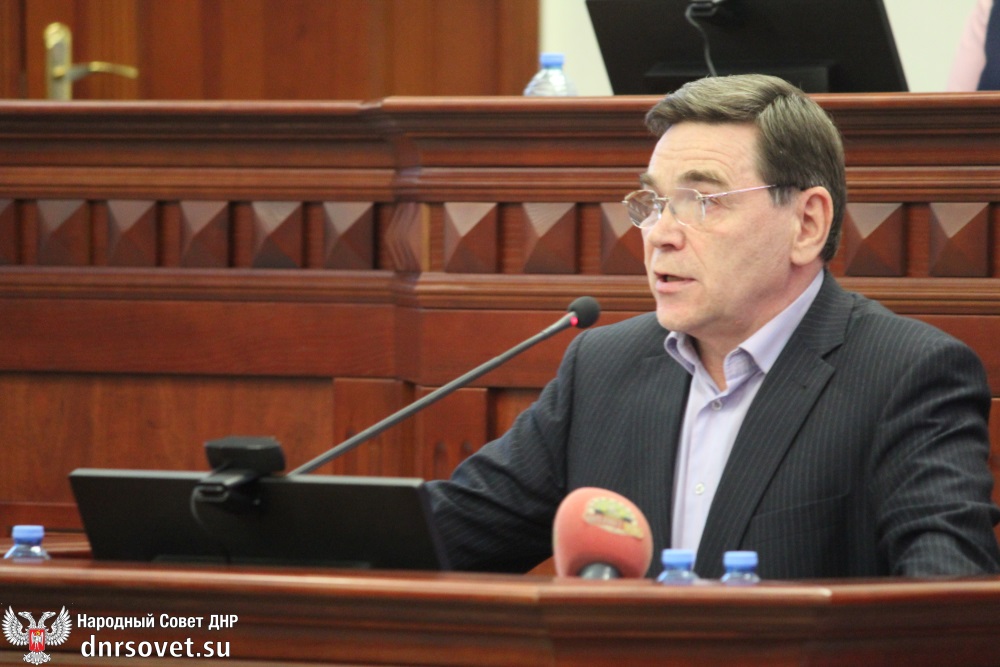
Candidate of Economic Sciences, Associate Professor at the Department of Theory of Management and State Administration of the State Educational Institution of Higher Professional Education “Donetsk Academy of Management and Public Service under the Head of the Donetsk People’s Republic” Eugeny Kotov spoke about some aspects of scientific understanding of local government.
“Also, when preparing the legal base of local self-government, it is worth to resort to a more balanced approach to the use of terminological apparatus. Many confuse or identify the concepts of “local government” and “municipal government”. These concepts differ significantly. In the first case, participation of the population through the forms of direct democracy is envisaged, while in the second variant, only the activities of local authorities in exercising their powers are assumed. Thus, the concept of “local self-government” is broader and more complete,” Eugeny Kotov said.
The head of the Central Executive Committee of the Donetsk Republic public movement, Alexey Muratov, clarified the issue of creating the concept of local self-government from the point of view of the leading public force in the Republic.
“One of the main conditions for the successful formation and development of the local self-government system is the self-organization of the population. An important role in this process is played by public movements and organizations. Realizing their specific tasks and functions, such associations solve issues of public importance and make a significant contribution to state-building.
Today we are yet to develop an effective concept of a system of local self-government for the Donetsk People’s Republic. And for this it is necessary, among other things, to establish cooperation between local governments and public movements.
It must be said that a great work has already been done in this direction in the Republic. Thus, many heads of city and district councils took on additional responsibility and headed the local branches of the public movement leading in the DPR – the Donetsk Republic. This made it possible to create a team of leaders of public opinion who, under difficult conditions, are able to quickly solve problems arising at the local level on their own,” Alexey Muratov informed the present.
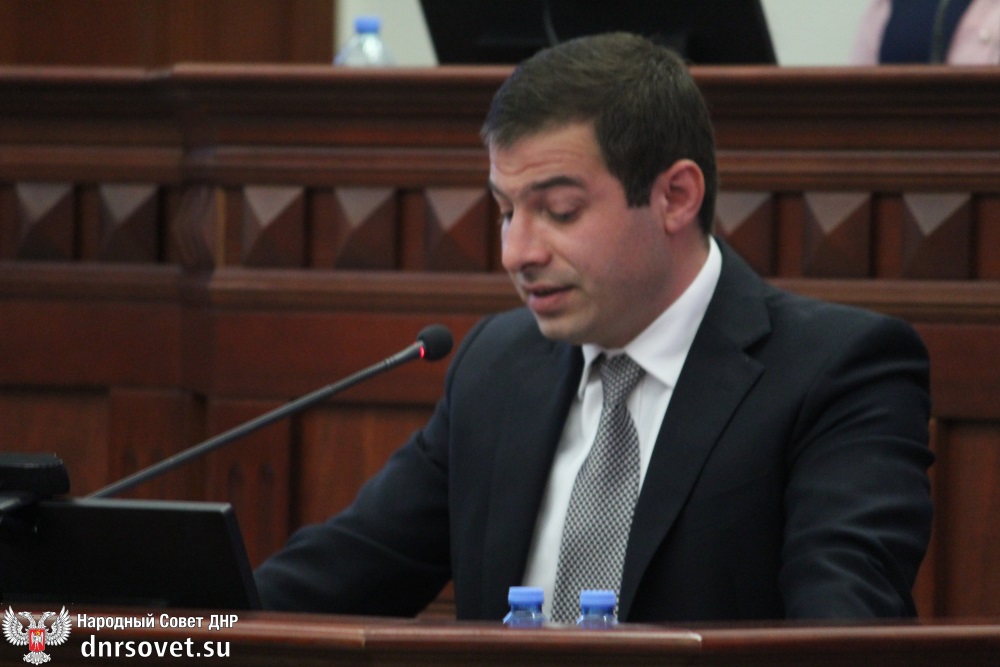
Javad Iskenderov, the deputy chairman of the Donetsk city branch of the Free Donbass public movement, supported the previous speaker in defining the role of public movements for creating an effective local government system.
“The development of statehood on the principles of democracy requires the definition of the place and role of local self-government in the system of social relations, the search for ultimate models of power organization. I agree with the previous speaker that one of the most important principles of combining the actions of the state and citizens is the interaction of municipal authorities with public organizations.
Such cooperation can take various forms. This could be the creation of working groups to elaborate development plans, organizing monitoring centres under local administrations to identify existing problems in the social sphere, organizing joint public events, holding discussions on media platforms with the participation of local authorities and public associations’ representatives,” Javad Iskenderov concluded.